- Why the TfL cyberattack captured so much attention
- Who are Scattered Spider?
- How the attackers got in
- From a helpdesk call to the "keys to the kingdom"
- The bigger lesson: identity has become the new attack surface
- Why AI makes the challenge even greater
- What the TfL incident tells us about business risk
- Questions every organisation should be asking
- How partners can help build cyber resilience
- Final takeaway
The most startling aspect of the Transport for London (TfL) cyberattack was not the scale of disruption, the cost of recovery or the months of operational headaches that followed. It was that the people behind it were teenagers.
In an era dominated by discussions around artificial intelligence, nation-state threats and increasingly sophisticated cybercrime operations, it is easy to assume that major breaches require extraordinary technical expertise. Yet the TfL incident tells a different story.
The attackers didn't begin with an advanced exploit or a previously undiscovered vulnerability. They began with a phone call. That fact should make every organisation stop and think.
Because for all the technological change that has taken place over the last four decades, one thing about cybersecurity remains remarkably consistent: people are often easier to target than technology.
Why the TfL cyberattack captured so much attention
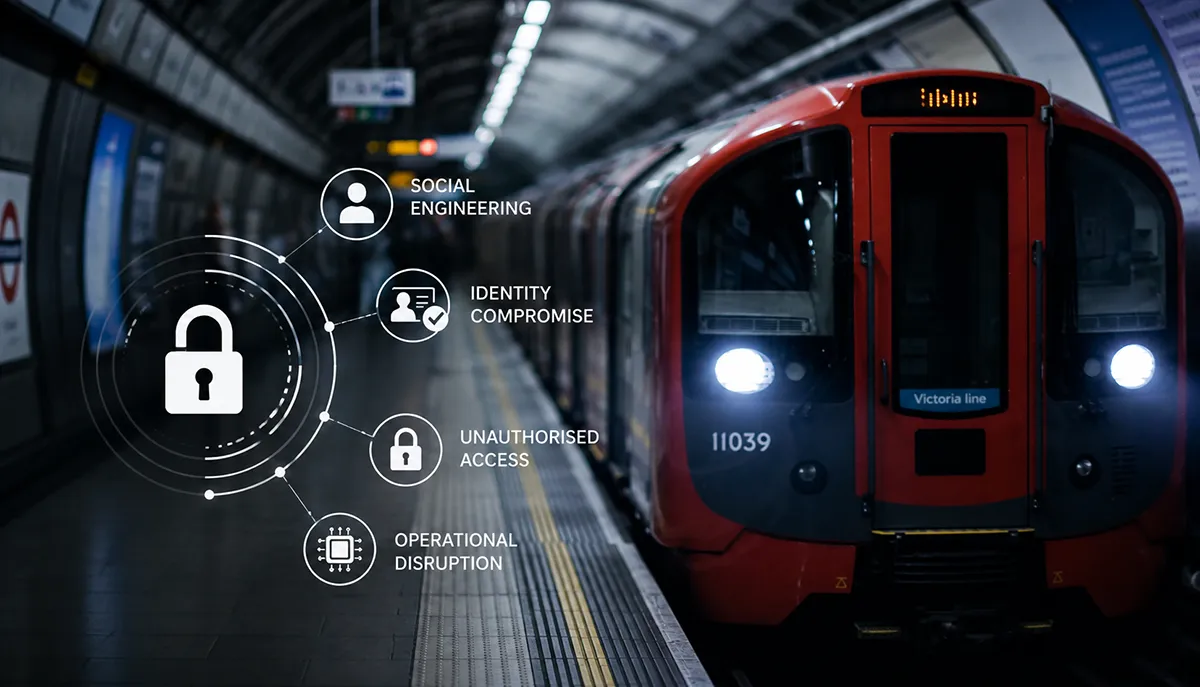
When members of the Scattered Spider group infiltrated TfL's systems in 2024, the consequences were significant.
Services were disrupted for months. All 27,000 employees were required to reset their passwords. A total of 148 systems became inoperable, including critical systems that required extensive manual workarounds. According to the National Crime Agency (NCA), the incident resulted in £29 million in loss and recovery costs and could have had far wider economic consequences had the transport network been fully disrupted. Those figures alone would have guaranteed headlines.
What made the incident particularly fascinating to cybersecurity professionals, however, was not the outcome but the method. This wasn't a story about malware. It wasn't a story about a sophisticated technical exploit. It was a story about trust, identity and human behaviour. And that's exactly why businesses of every size should pay attention.
Who are Scattered Spider?
Scattered Spider has become one of the most closely watched cybercrime groups in the world. The collective has been linked to a number of high-profile attacks and has attracted attention for its preference for social engineering, identity compromise and abuse of legitimate access rather than relying exclusively on technical vulnerabilities.
The individuals convicted in relation to the TfL attack were teenagers at the time of the incident. The NCA later described them as leading members of the Scattered Spider collective, underlining the significance of the group's activities and the attention it has attracted from law enforcement and cybersecurity professionals alike. While that fact understandably generated media interest, the more important lesson is what it reveals about modern cybercrime.
The attack succeeded not because of extraordinary technical brilliance, but because trust was successfully manipulated. That should concern organisations far more than the age of the perpetrators.
How the attackers got in
The attackers did not breach TfL's systems through a firewall vulnerability or a sophisticated piece of malware. Instead, they obtained partial identity information relating to a TfL employee and then repeatedly contacted the helpdesk while impersonating that individual. After numerous attempts, they eventually persuaded support staff to reset the employee's multifactor authentication credentials. And just like that, they were inside the network.

The simplicity of the initial compromise is precisely what makes the incident so powerful as a learning opportunity. Many organisations invest heavily in cybersecurity technologies. Yet if identity verification processes can be bypassed through persistence and persuasion, technical controls alone may not be enough.
From a helpdesk call to the "keys to the kingdom"
Getting into the network was only the beginning. Once inside, the attackers were able to elevate their privileges and eventually create a domain administrator account, described during legal proceedings as possessing the "keys to the kingdom". For non-technical audiences, that phrase perfectly captures the significance of what happened.
At that point, the attackers effectively had the highest level of access available within the environment. Theoretically, they could have caused far greater disruption.

One of the more surreal details to emerge from reporting around the case was that, despite having attained an extraordinary level of control, the attackers reportedly spent time searching TfL's customer database for celebrities.
It's a detail that feels almost absurd given the seriousness of the situation. Yet it highlights an important truth: organisations don't get to choose the motives, maturity or objectives of the people targeting them. They only get to choose how well prepared they are.
The bigger lesson: identity has become the new attack surface
The TfL attack reflects a broader shift that has been developing for years. As organisations adopt cloud services, support hybrid working, embrace remote access and become increasingly digital, users now operate far beyond the traditional network perimeter.
Attackers have adapted accordingly. Rather than attempting to force their way through security controls, many now focus on obtaining legitimate access. Identity has become one of the most valuable assets within modern organisations. Once a valid user account is compromised, attackers may be able to move through systems while appearing entirely legitimate. This makes identity-based attacks particularly challenging to detect and contain.

The initial breakthrough often looks like normal business activity.
- A password reset request.
- A support call.
- A login using valid credentials.
A user following what appears to be a perfectly reasonable process.
Why AI makes the challenge even greater
If the TfL incident demonstrates the power of social engineering, AI has the potential to amplify that risk significantly. Attackers can now generate highly personalised phishing messages at scale. Voice-cloning technology can make impersonation far more convincing. Automated systems can continuously adapt their approach in response to user behaviour and verification processes.
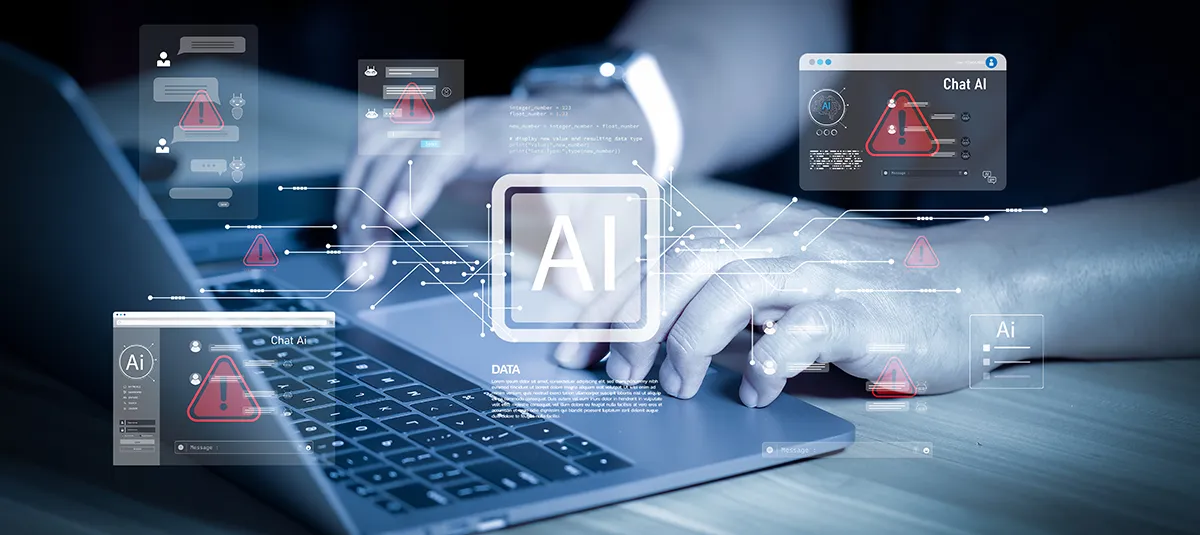
The result is that attacks are becoming more targeted, more personalised and often more difficult to identify. Technology will undoubtedly play a critical role in defending against these threats. But organisations will also need stronger processes, better verification procedures and greater user awareness.
What the TfL incident tells us about business risk
Cybersecurity incidents are often discussed in technical terms. For business leaders, however, the real impact is operational.
- Service disruption affects customers.
- Recovery activities consume resources.
- Employees lose productivity.
- Projects are delayed.
- Stakeholders demand answers.
- Trust can be damaged.
The TfL attack demonstrates how an identity compromise can quickly become a business resilience issue. And while the scale of the incident was considerable, the tactics involved were not unique to large enterprises.
The same approach could be used against a regional reseller, a professional services firm, a manufacturer or an SME. The lessons apply universally.
Questions every organisation should be asking
Cybersecurity is increasingly about preparation, process and resilience rather than technology alone.
Every organisation should be asking:
- What impact would a similar incident have on our business, customers and partners?
- Do we have robust identity security controls in place?
- How do we verify individuals requesting password resets or multifactor authentication changes?
- Are privileged accounts subject to additional verification procedures?
- Are employees trained to recognise phishing and social engineering attacks?
- Is that training refreshed regularly?
- Can we effectively monitor suspicious activity and respond quickly?
- Are we prepared for increasingly sophisticated AI-enabled threats?
- Do we have a tested business continuity and disaster recovery plan?
The organisations that can confidently answer those questions will typically be better positioned to withstand modern cyber threats.
How partners can help build cyber resilience
As trusted technology advisers, partners are increasingly expected to help customers navigate a changing cybersecurity landscape. That support extends well beyond recommending products. Customers need guidance on identity security, privileged access management, security awareness, threat monitoring, incident response and business resilience.
Many organisations understand that cyber risk exists. Far fewer know exactly where to start addressing it. This creates an opportunity for partners to deliver significant value through expertise, managed services, strategic guidance and ongoing support.
The most successful partners will be those that help customers strengthen people, processes and technology together rather than treating cybersecurity as purely a technical challenge.
Final takeaway
The lasting significance of the TfL incident is not that another large organisation suffered a cyberattack. It is that two teenagers, later identified and prosecuted following a National Crime Agency investigation, were able to infiltrate one of the UK's most important transport networks through persistence, impersonation and the exploitation of trust.
For all the advances in AI, automation and cybersecurity technology, many successful attacks still begin with something fundamentally human: a convincing conversation, a trusted process and a momentary lapse in verification. That is why the TfL breach matters. And that is why every organisation, regardless of its size, should be paying attention.
The organisations that strengthen identity controls, improve verification processes and build a culture of security awareness will be far better prepared for the next generation of cyber threats.
The TD SYNNEX Security Practice can help you develop your ability to advise customers on identity management, cyber resilience and digital protection.
Inspired by...
Other articles you might like