As AI adoption evolves from simple prompt-based interactions to more sophisticated reasoning and agentic AI systems, organisations will need new approaches to infrastructure, performance optimisation and cost management. At TD SYNNEX EXPLORE, NVIDIA shared its vision for the next stage of AI development and what it means for partners and customers.
Advancing AI requires advancing infrastructure
As we start to see adoption of agentic AI systems, there is a shift to multi-step reasoning models which produce better, more nuanced and accurate results. These advanced workloads require significantly more processing power and a support from a different kind of infrastructure.

At TD SYNNEX EXPLORE, NVIDIA highlighted how the industry is moving towards an inference-centric model, where AI systems spend more time reasoning, analysing and executing tasks than being trained. This shift is driving demand for infrastructure that can support continuous AI operations, deliver faster insights and scale efficiently across the organisation.
Moreover, the rising cost of AI tokens is compelling a shift to new infrastructure designs, which can optimise the cost of delivering AI services while maintaining performance and accuracy.
NVIDIA is shifting its hardware focus toward inference scaling, releasing open-source reasoning model families, and building a pipeline for specialised software development. These open models will allow the integration of AI resources across the data centre and the whole IT infrastructure, while keeping within security and governance constraints.
Supporting partners through the AI journey
For partners, these developments create an opportunity to help customers build AI strategies that support long-term business outcomes.
TD SYNNEX is working closely with NVIDIA to assist partners in educating their customers to harness the power of Artificial Intelligence and drive the right outcomes.
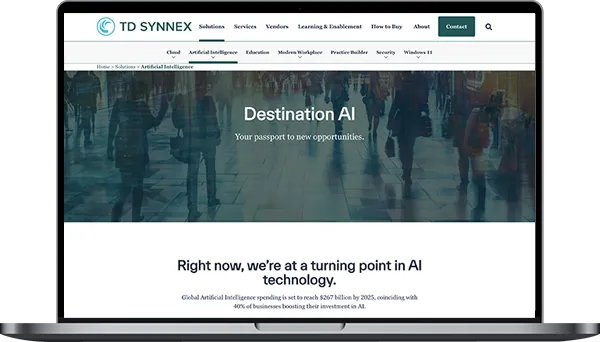
Destination AI
Destination AI from TD SYNNEX is our comprehensive end-to-end programme designed to help you and your customers get ahead of the AI curve.